We offer
TMS therapy
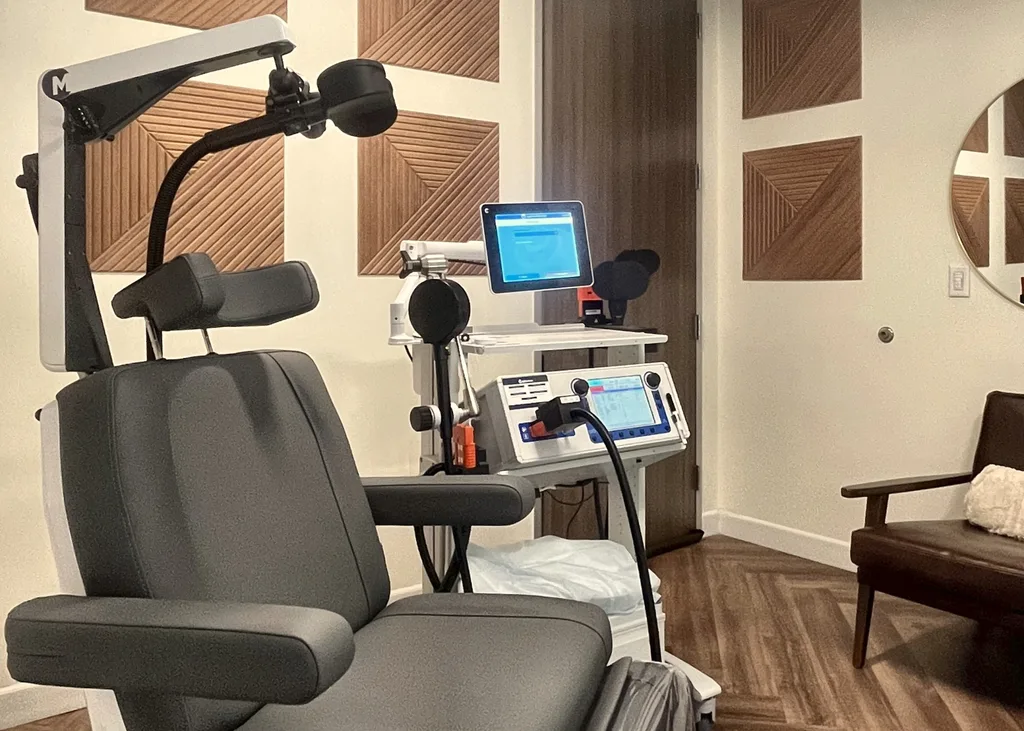
Non-invasive magnetic stimulation of mood-related brain areas. FDA-cleared for major depressive disorder. What we provide at our Dallas clinic.

If medication has not been enough, you still have options. We help adults in Dallas weigh TMS and other next steps, honestly and without pressure.
Treatment-resistant depression usually describes major depression that has not responded well to at least two antidepressant trials at an adequate dose and duration. A consultation can help distinguish an incomplete response, difficult side effects, and other reasons a treatment may have fallen short.
Our job is to look at everything you have already tried and help you understand the options that actually make sense from here, including TMS for depression.
You can seek another assessment without knowing whether the term “treatment-resistant” applies. Bring a list of medications, approximate doses and dates, benefits, and side effects. Include therapy and other treatments you have tried.
Dr. Clark reviews your history and goals with you. The conversation can include medication management, alternatives to antidepressants, and whether an outpatient TMS course fits your needs.
Keep taking prescribed medication as directed while you arrange care; discuss any changes with your prescriber. NIMH provides background on depression treatment and medication decisions.
Before choosing TMS, ask about your proposed schedule and how progress will be assessed. Our Dallas clinic guide helps with planning repeated visits.
We offer
Non-invasive magnetic stimulation of mood-related brain areas. FDA-cleared for major depressive disorder. What we provide at our Dallas clinic.
We can discuss
A different mechanism that some adults with treatment-resistant depression consider. We can talk through whether it fits and coordinate care.
Referral
An established option for severe or urgent cases, delivered in a hospital setting. We help you understand when it is worth a referral.
Weighing two of these? See TMS vs ketamine for depression.
We review every treatment you have tried and how each one went.
We lay out the realistic next steps, including when something other than TMS makes more sense.
If TMS fits, we personalize the protocol and begin short outpatient visits.
We measure symptoms and adjust, rather than leaving you to interpret changes alone.
Our full TMS course is $3,500, including your assessment with Dr. Clark. We do not bill insurance; reimbursement from a superbill depends on your plan and is not guaranteed. See cost and payment details.
It generally describes major depression that has not responded adequately to at least two antidepressant trials at adequate dose and duration. The label is less important than choosing the right next step for you.
Options can include TMS, ketamine or esketamine, ECT for severe cases, and changes to therapy or medication strategy. We help you weigh them honestly rather than pushing one path.
They work through different mechanisms and suit different situations. TMS is non-invasive and outpatient; ketamine acts quickly for some but needs careful monitoring; ECT requires anesthesia and may be considered for severe depression or when other treatments have not helped. We explain the trade-offs for your situation.
TMS is FDA-cleared for major depressive disorder and is commonly used after medication has fallen short. Responses vary, which is why we track your symptoms over time instead of assuming.
A full TMS course at RNH is $3,500, including your assessment with Dr. Clark. We do not bill insurance. Superbills are available for applicable services; out-of-network reimbursement depends on your plan and is not guaranteed.
Call us to book a consultation. We will review your full history and explain which options are reasonable next steps.
Cost & payment
$3,500Full TMS course
Initial psychiatric assessment with Dr. Clark and the full course of TMS treatment. Self-pay; we do not bill insurance.
TMS pricing and payment details →Visit us in Dallas
4514 Cole Ave Ste 200, Dallas, TX 75205
Visits by appointment.
Welcoming patients from Dallas, Highland Park, University Park, Preston Hollow, Lakewood, and North Dallas.
Plan your visit → Get directions ↗Tell us what you have already tried. We will help you weigh TMS and the other realistic options for treatment-resistant depression. The fastest way is a quick call.
Call to book (682) 540-0987 Contact hoursMon–Fri 8am–8pm CTSat 12pm–6pm CTPrefer we call you?
Leave your number and a good time. No medical details needed here.
Confidential. Not for emergencies. In a crisis, call or text 988.